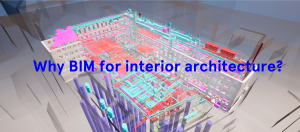
Increasing complex ecosystems
Interior architecture is becoming part of an increasingly complex ecosystem. Existing buildings, multiple stakeholders, growing information requirements, sustainability goals, and rapidly evolving technologies require new ways of working together.
„BIM creates an incredibly cool level of transparency for everyone involved in the construction process. And this transparency—where everyone can see what the others are doing—makes the process incredibly fun. It prompts you to think beyond your own office.“ Chris Middleton / Founding Partner at Kinzo
For us at Kinzo, BIM is therefore not primarily a software tool. It is a collaborative framework that enables all project participants to work from the same information base, creating greater transparency, clearer communication, and better coordination across disciplines.
When everyone shares the same understanding of a project, conversations become more productive, decisions can be made faster, and planning becomes more reliable. Most importantly, transparency replaces blame with problem-solving and encourages a culture of collaboration rather than isolated decision-making.
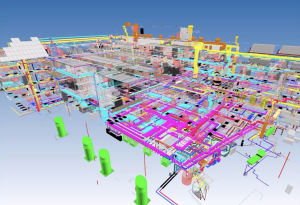
„You can immediately see what other people’s priorities are and where potential conflicts might arise. This saves a lot of time and allows decisions to be made more quickly.“ Lorenzo Soldi / Architect at Kinzo
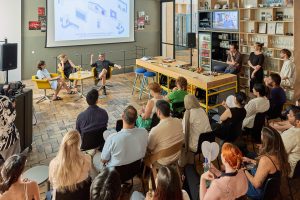
This is why we wanted to bring together different perspectives from practice, implementation, education, and innovation—and discuss how BIM can meaningfully address the realities of interior architecture today.
MAIN ASPECTS
1. BIM is not software – BIM is a way of working.
The biggest shift in perspective in this discussion: BIM does not stand for a tool, but for a collaborative process that structures information, communication and cooperation.
2. Transparency leads to better projects.
When all stakeholders have access to the same information, this leads to greater understanding, better coordination and more informed decisions – across all disciplines.
3. BIM is, above all, a cultural shift.
The real change does not lie in the technology. Successful BIM projects are based on openness, shared learning and a willingness to share knowledge.
4. Moving away from the ‘blame game’ towards problem-solving.
A particularly prominent theme of the discussion: in BIM processes, planning becomes more transparent. As a result, finger-pointing takes a back seat – and collaborative problem-solving comes to the fore.
5. The future belongs to interconnected data and continuous collaboration.
Regular data exchanges, shared models and, in future, AI-supported analysis will enable faster decision-making and a new standard of project work.